Umami
Sushi
Services:
Branding; UX/UI Design; App Development
Technologies:
Figma; MSSQL; .NET5; Flutter; Azure DevOps
2020 – 2021
Project Overview
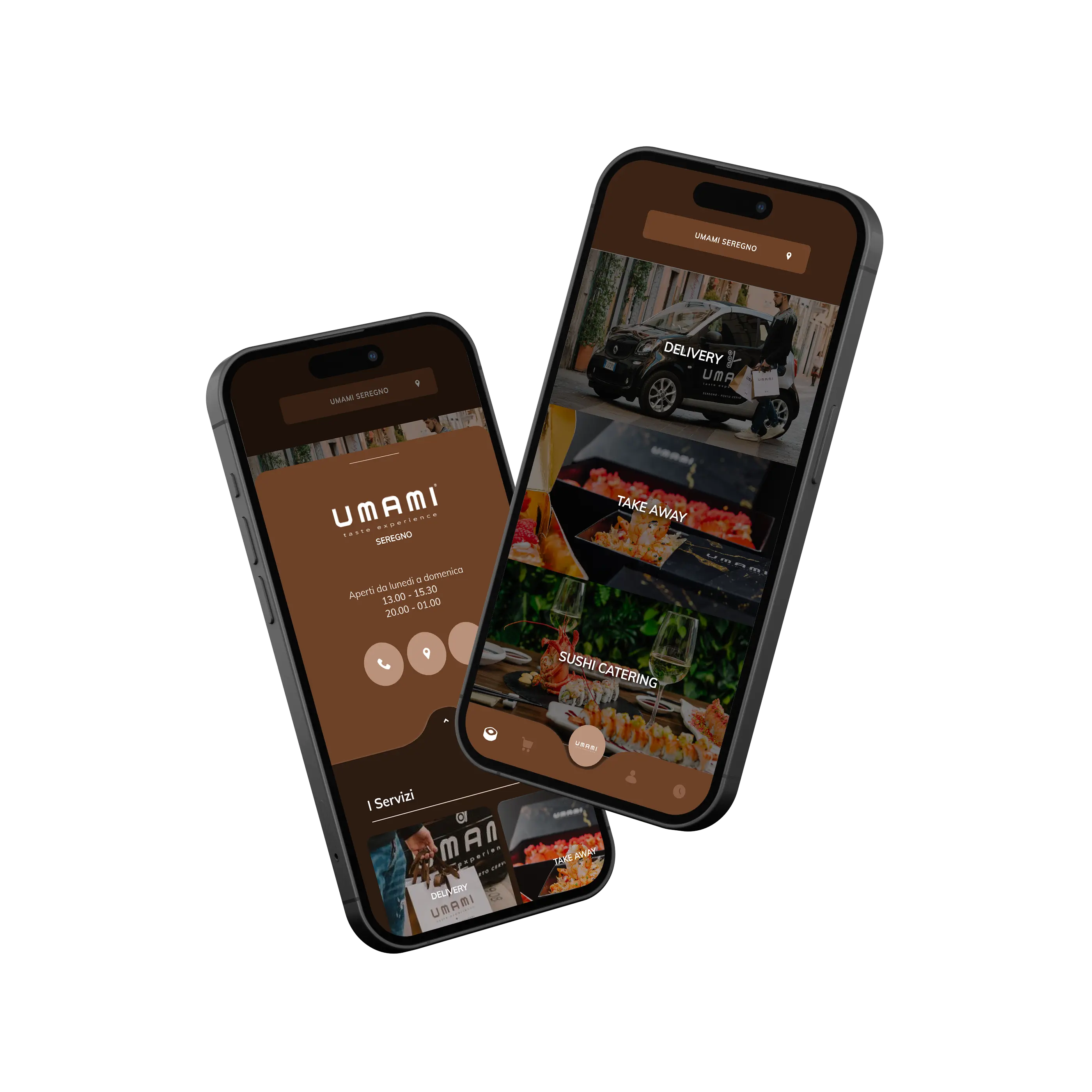
In April 2020, Umami, a renowned sushi restaurant chain, found itself facing restrictions due to the COVID-19 pandemic. These restrictions, coupled with strong demand for takeout and delivery, made it necessary to establish a proprietary digital channel capable of managing online orders across multiple locations, with rapid implementation and a user experience that lived up to the brand’s standards.
Umami chose to partner with PurpleSoft to design and develop a dedicated mobile app (iOS and Android) with the goal of centralizing the entire order flow, reducing reliance on external platforms, and protecting margins from high commissions. At the same time, the introduction of in-house delivery drivers required a precise and reliable system to coordinate orders, preparation, and deliveries across multiple locations, without impacting in-store service.
UX/UI Design
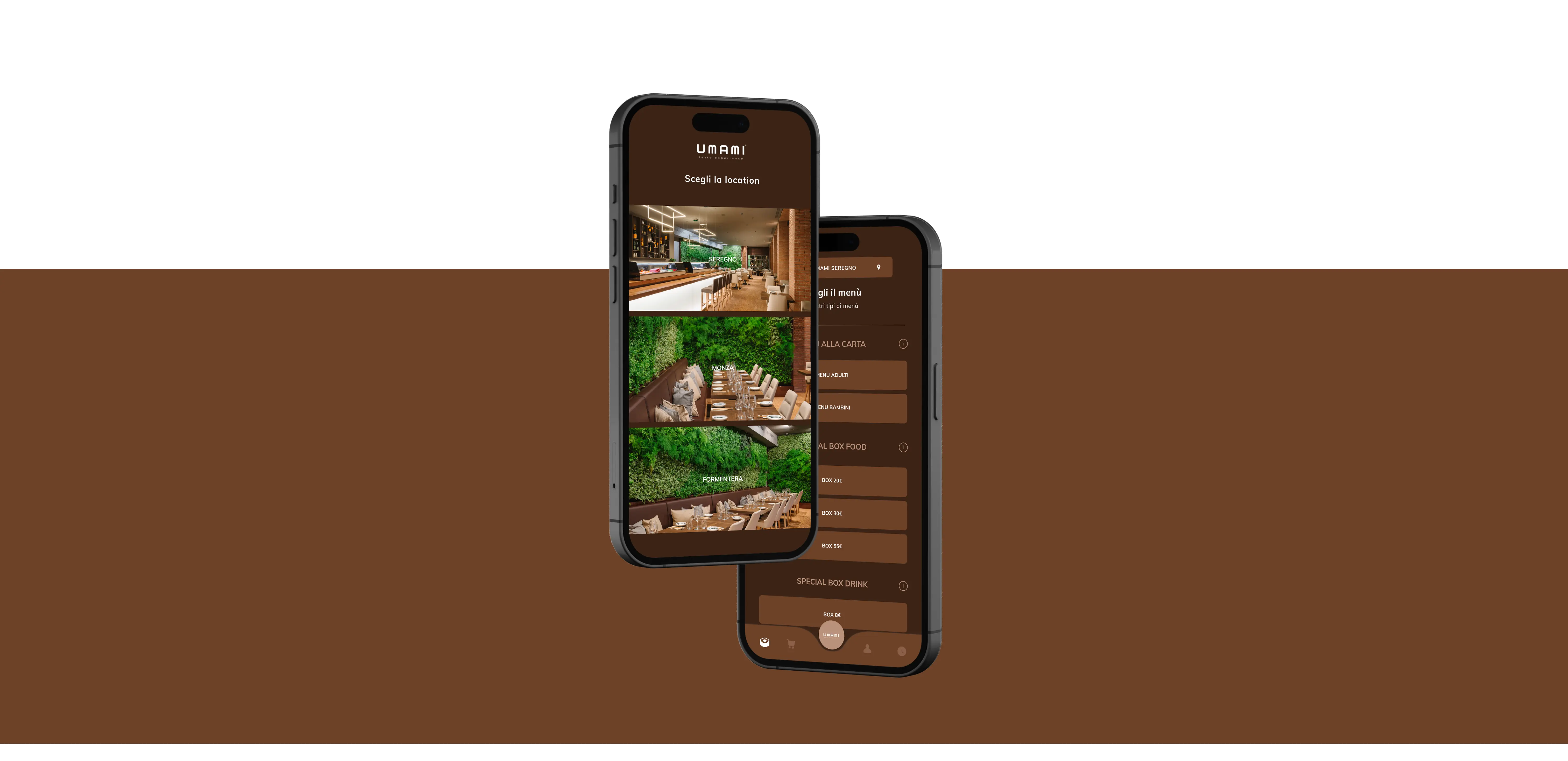
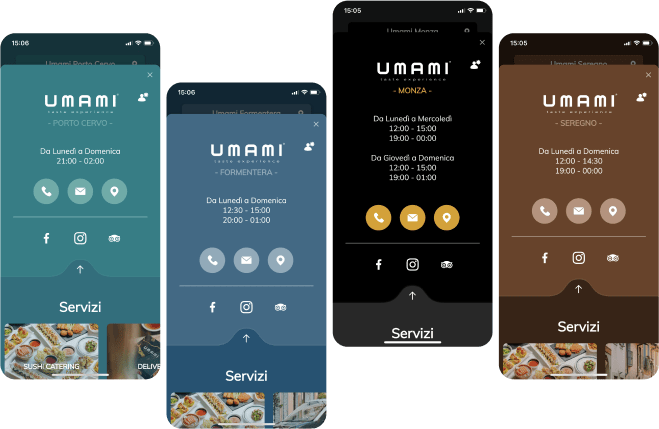
The app’s interface was designed to offer a simple and intuitive experience, while maintaining a strong alignment with the brand’s visual identity. Each restaurant location features custom graphics that strengthen the connection with customers and highlight the unique character of each location.
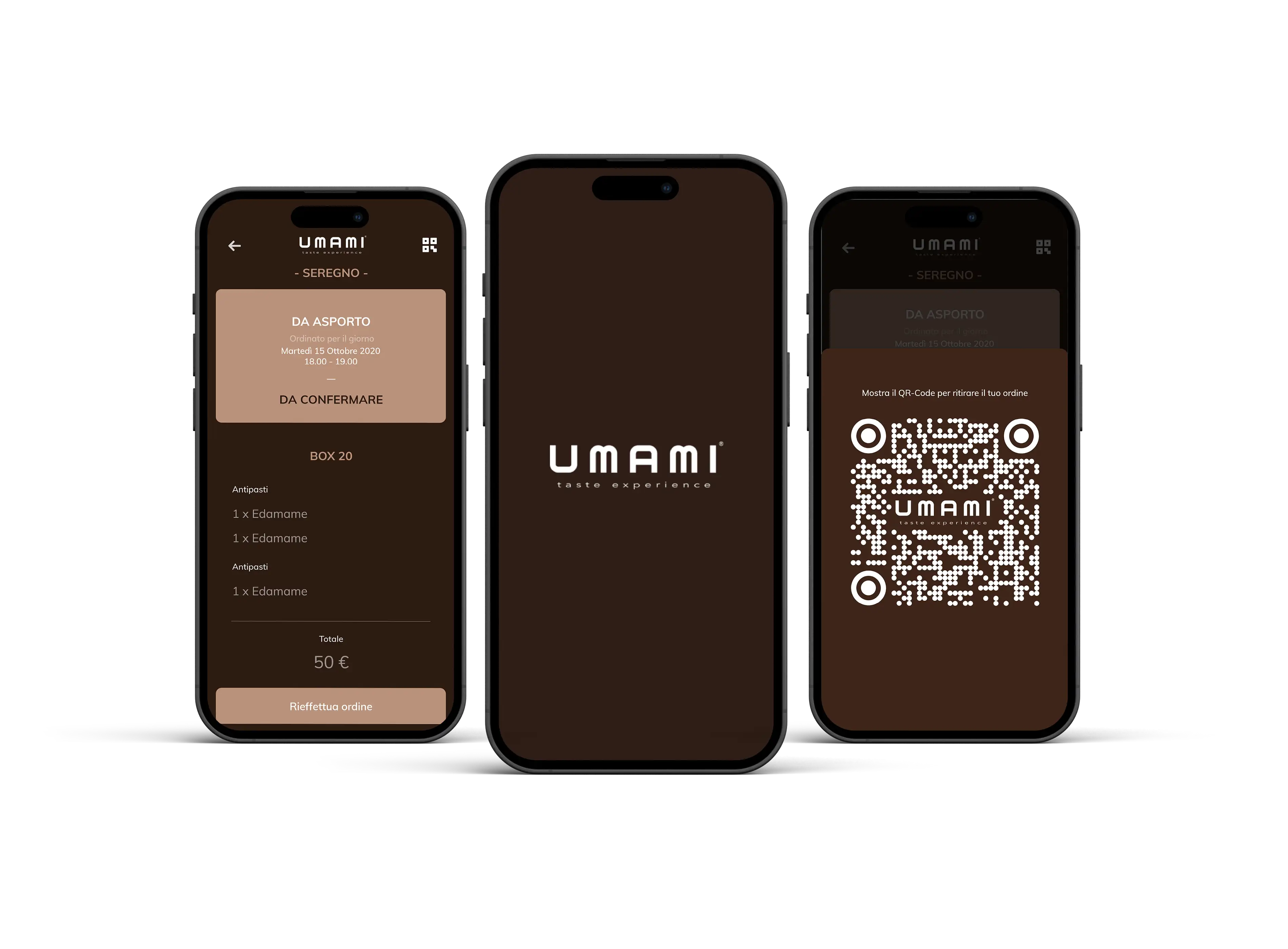
Users can easily select the type of service they want (takeout, delivery, catering, or boat service) and create custom sushi boxes using a guided system, with rules that can be configured by the administrator.
Each order is automatically assigned a unique QR code, which makes it easier and faster for customers to pick up their orders in-store and simplifies the process for staff.
Software Development
For this project, we developed an integrated system consisting of an SQL Server database, a Web API built with C# .NET 5, a mobile app for iOS and Android built with Flutter (Dart), and a web-based admin panel built with Angular 12.
The architecture was designed to be extremely flexible. The database has been configured to manage a wide range of locations, each with specific services. In addition, each location can offer various menus, each of which can be categorized into different types, such as the children’s menu, the set menu, the à la carte menu, etc. The system has also been designed to handle multiple languages and time zones, given that Umami’s locations are spread across various countries.
In addition, we have developed a system for generating QR codes to be displayed on tables at various locations, which show the menus from the website in real time, enabling efficient menu management and a seamless user experience.
To speed up development and improve the system’s efficiency, we have integrated our proprietary SDKs:
Purple.sdk.authentication: a tool that simplifies user login by supporting authentication via email, Google, Apple, and other popular providers.
Purple.sdk.media: simplifies multimedia content management, allowing customers to update images and videos on the app themselves.
Purple.sdk.translation: server and client components that allow users to change the text in the app, on the website, and in notification emails from the admin panel.
The use of these SDKs accelerated the development process while providing the client with self-service tools for content management and localization. This resulted in a more efficient and scalable system in a constantly evolving environment.
The technologies
We used a range of modern technologies to develop the system, each chosen for its specific strengths:
Database: MSSQL Server 2019 – Thanks to its robustness and scalability, it is ideal for managing a wide variety of data, from different locations to various services and menus.
Web API: .NET 5 C# – Chosen for its efficiency and security, it is essential for connecting the various components of the system.
Mobile App: Flutter (Dart) iOS/Android – This cross-platform development framework allowed us to create an app that runs smoothly on both operating systems.
Admin Panel: Angular 12 (TypeScript) – This framework made it possible to create an intuitive and robust management environment for the client.
Conclusions
The project enabled Umami Sushi to quickly launch its own digital channel, ensuring uninterrupted service during the most critical phases of the pandemic. The platform made it possible to centrally manage online orders across all locations, offering a user experience that is clear and consistent with the brand, along with a robust technical infrastructure capable of handling high volumes and operational fluctuations.
From an operational standpoint, the system’s configurability has simplified day-to-day management and reduced manual tasks, while the use of a unique QR code for each order has sped up order picking and internal workflows, improving staff workflow organization.
At a later stage, the client decided to return to third-party delivery platforms to reduce the costs associated with managing in-house delivery personnel and maintaining proprietary infrastructure. However, the solution implemented remains a concrete example of an end-to-end platform: rapidly developed, highly flexible, and multi-location, with full integration between UX/UI, operations, and technology.